 Home and Gardening Ideas At home and Gardening ideas we believe inspiring readers about homesteading, self sufficiency
Edible Flowers Are Suddenly Everywhere
And Yes, People Are Actually Eating Them 🌸
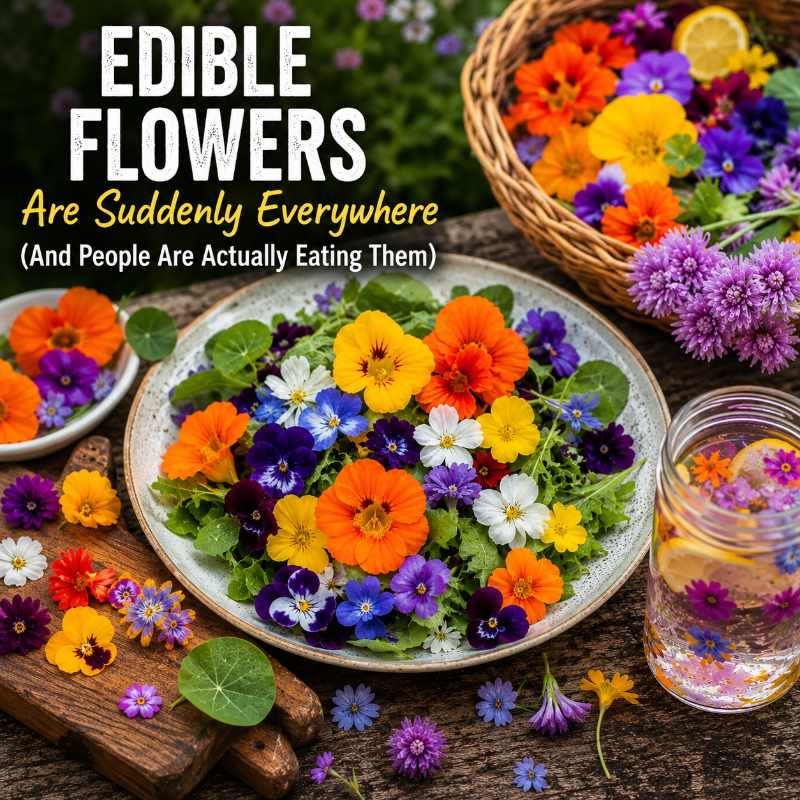
There is a new garden trend popping up everywhere, and it is almost too pretty to believe. People are not just growing flowers to look at anymore. They are adding them to salads, cakes, ice cubes, teas, summer drinks, grazing boards, and even homemade butter.
Yes, edible flowers are suddenly everywhere, and people are actually eating them.
At first, it sounds a little strange. Flowers feel like something you put in a vase, not on your dinner plate. But once you see a bright nasturtium scattered over a salad or tiny violas pressed into homemade biscuits, it is easy to understand why this trend has taken off.
Edible flowers are beautiful, natural, old-fashioned, and surprisingly useful. They make simple food look expensive, they are fun to grow, and many of them attract bees, butterflies, and other pollinators to your garden too.
The best part? You do not need a huge garden to try it. Many edible flowers grow happily in pots, window boxes, raised beds, borders, and even small patio containers.
So what exactly are edible flowers, which ones can you safely eat, and why is everyone suddenly obsessed with them? Let’s dig in. 🌼
Why Edible Flowers Are Becoming So Popular
Edible flowers are not new. People have used flowers in cooking for centuries. What is new is how popular they have become again.
Part of the appeal is simple: they make food look stunning.
A plain salad becomes a garden bowl. A simple cake looks like something from a country bakery. A jug of water feels like a fancy summer drink. Even homemade butter suddenly looks special when mixed with chopped herbs and colourful petals.
But the trend is not just about looks. Edible flowers also fit perfectly with what many people want right now:
🌸 More natural food
🌸 Pretty but practical gardens
🌸 Cheap ways to make meals feel special
🌸 Pollinator-friendly planting
🌸 Cottage garden style
🌸 Growing something unusual at home
There is also a strong “back to basics” feeling about it. It reminds people of old gardens, homemade food, and simple living.
And let’s be honest, there is something magical about walking outside, picking a few safe flowers, and using them in the kitchen.
What Are Edible Flowers?
Edible flowers are flowers that are safe to eat when grown and prepared properly.
Some have a mild flavour. Some are peppery. Some taste sweet, citrusy, grassy, or herbal. Others are mostly used because they look beautiful.
They can be used fresh, dried, frozen into ice cubes, infused into drinks, sprinkled over desserts, added to salads, or used as decoration.
But here is the important bit:
Not every flower is edible. Some flowers are toxic.
That means you should never eat a flower unless you are 100% sure what it is and that it has not been sprayed with chemicals.
Flowers from florists, garden centres, supermarkets, roadsides, and public parks may have been treated with pesticides, so they are not always safe to eat.
The safest option is to grow your own edible flowers from seed.
Best Edible Flowers To Grow At Home 🌿
Here are some of the most popular edible flowers for beginners.
1. Nasturtiums
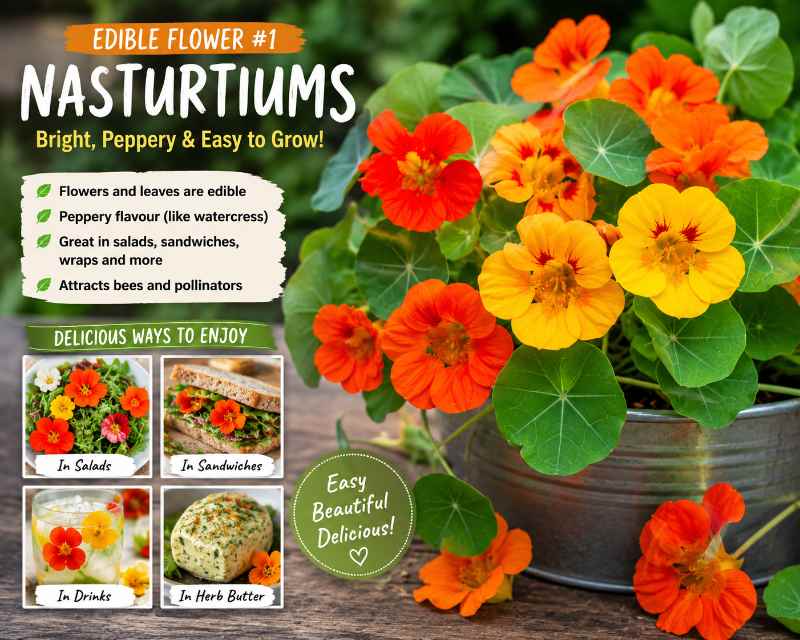
Nasturtiums are one of the easiest edible flowers to grow, and they are perfect for beginners.
They have bright orange, yellow, and red flowers with a peppery flavour, a little like watercress. The leaves are edible too.
Use them in:
🌸 Salads
🌸 Sandwiches
🌸 Wraps
🌸 Savoury platters
🌸 Herb butters
They grow quickly, look beautiful, and do well in poor soil. In fact, if the soil is too rich, you may get lots of leaves and fewer flowers.
2. Violas And Pansies
Violas and pansies are probably the prettiest edible flowers for decorating food.
They have a mild flavour and come in beautiful colours, making them perfect for cakes, biscuits, cupcakes, ice cubes, and salads.
They are especially popular for pressed flower biscuits and cottage-style baking.
Use them for:
🌸 Cake decorating
🌸 Ice cubes
🌸 Shortbread
🌸 Summer drinks
🌸 Grazing boards
They are small, delicate, and look amazing in photos.
3. Calendula
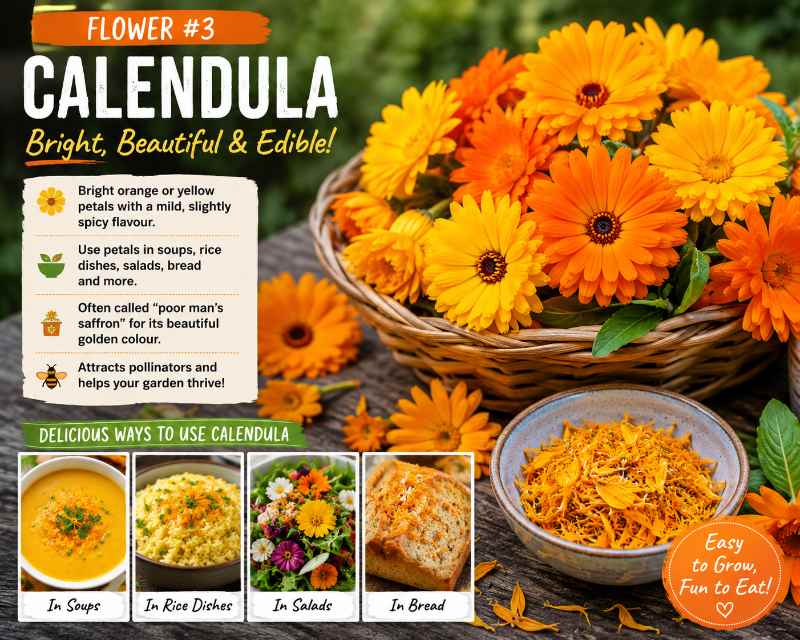
Calendula is sometimes called pot marigold, and it is a brilliant edible flower for the garden.
The petals are bright orange or yellow and can be sprinkled into soups, rice dishes, salads, and homemade bread.
Calendula is often called “poor man’s saffron” because it can add colour to food.
Use the petals only, as the green base can taste bitter.
4. Lavender
Lavender is one of the most famous edible flowers, but it needs to be used carefully.
A little lavender can taste floral and calming. Too much can taste like soap.
It works well in:
🌸 Shortbread
🌸 Lemonade
🌸 Sugar
🌸 Tea
🌸 Honey
🌸 Cakes
Lavender is also great for attracting bees, so it is useful in both the garden and the kitchen.
5. Chive Flowers
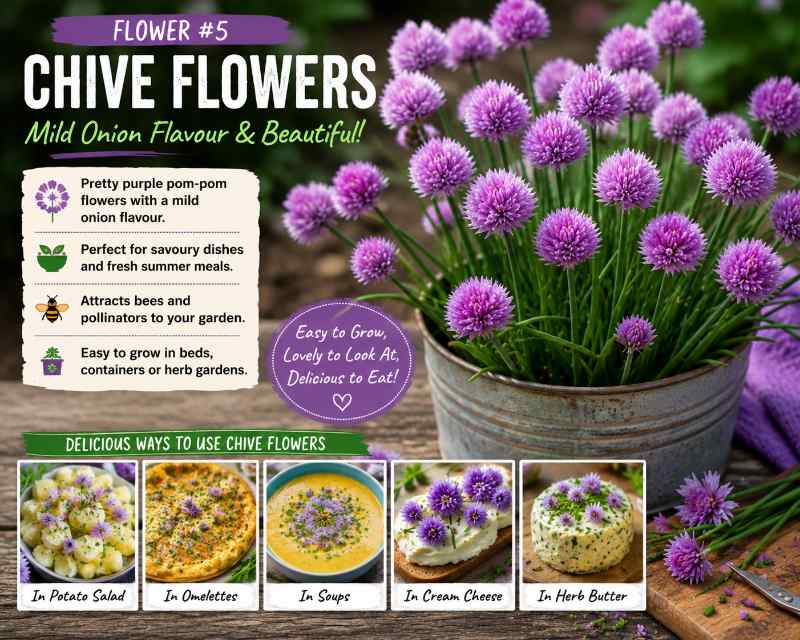
Chive flowers are beautiful purple pom-pom blooms, and they have a mild onion flavour.
They are perfect for savoury dishes.
Use them in:
🌸 Potato salad
🌸 Omelettes
🌸 Soups
🌸 Cream cheese
🌸 Herb butter
🌸 Salads
Just pull the tiny florets apart and sprinkle them over food.
6. Rose Petals
Rose petals can be edible if they come from unsprayed roses.
They have a floral flavour and can be used fresh or dried.
Use rose petals in:
🌸 Tea
🌸 Sugar
🌸 Jam
🌸 Cakes
🌸 Desserts
🌸 Homemade syrups
Remove the bitter white base of the petal before eating.
7. Borage
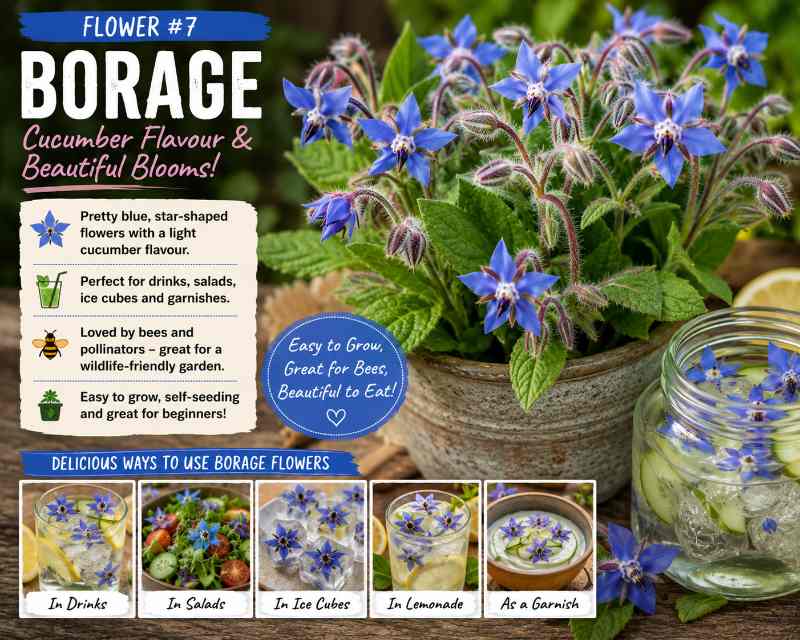
Borage flowers are usually blue and have a light cucumber-like flavour.
They look lovely frozen into ice cubes or added to summer drinks.
Borage is also loved by bees, making it a great choice for wildlife-friendly gardens.
Use it in:
🌸 Lemonade
🌸 Iced tea
🌸 Salads
🌸 Cocktails or mocktails
🌸 Ice cubes
How To Grow Edible Flowers Safely
Growing edible flowers is simple, but safety matters.
Start with seeds labelled as edible or suitable for culinary use. Avoid plants that may have been sprayed. Choose a sunny spot, use clean compost, and avoid chemical pesticides.
If pests become a problem, use gentle natural methods like hand-picking, companion planting, or insect netting.
A few good places to grow edible flowers include:
🌿 Raised beds
🌿 Herb gardens
🌿 Patio pots
🌿 Window boxes
🌿 Vegetable beds
🌿 Cottage garden borders
You can even mix edible flowers among vegetables. Nasturtiums, calendula, chives, and borage are especially useful because they can help attract pollinators.
How To Use Edible Flowers In Food
This is where the fun begins.
You do not need fancy recipes to use edible flowers. In fact, they work best when kept simple.
Try these easy ideas:
🌸 Sprinkle nasturtiums over a green salad
🌸 Freeze violas into ice cubes
🌸 Add lavender to homemade lemonade
🌸 Mix chive flowers into softened butter
🌸 Decorate cupcakes with pansies
🌸 Scatter calendula petals over soup
🌸 Add borage flowers to summer drinks
🌸 Press flowers into biscuits before baking
The trick is not to overdo it. Edible flowers should add beauty and gentle flavour, not overpower the whole dish.
Mistakes To Avoid
The biggest mistake is assuming all flowers are safe to eat.
They are not.
Avoid eating any flower unless you have identified it properly. Also avoid flowers from florists, supermarket bouquets, roadsides, sprayed gardens, or anywhere pets may have fouled the soil.
Another mistake is using too many strong-flavoured flowers. Lavender, rose, and herb flowers can become overpowering fast.
Also, introduce edible flowers slowly. Some people may be sensitive to certain plants, especially if they have allergies.
When in doubt, leave it out.
Why Every Garden Should Have A Few Edible Flowers
Even if you never become the sort of person who decorates cakes with petals, edible flowers are still worth growing.
They make your garden prettier, attract pollinators, support bees, and give you something unusual to use in the kitchen.
They are also a great conversation starter. Put a salad on the table with bright nasturtium flowers on top and someone will definitely ask about it.
That is why this trend works so well. It is simple, beautiful, useful, and a little surprising.
Common Questions About Edible Flowers
Are all flowers edible?
No. Some flowers are poisonous, so never eat a flower unless you are completely sure it is safe.
Can I eat flowers from the supermarket?
Not usually. Flowers sold for display may have been treated with chemicals and are not intended for eating.
What is the easiest edible flower to grow?
Nasturtiums are one of the easiest. They grow fast, look beautiful, and both the flowers and leaves are edible.
Do edible flowers actually taste nice?
Some do. Nasturtiums are peppery, borage tastes a little like cucumber, chive flowers taste mildly oniony, and violas are very mild.
Can I grow edible flowers in pots?
Yes. Many edible flowers grow well in pots, especially nasturtiums, violas, pansies, calendula, lavender, and chives.
Are edible flowers good for bees?
Many are. Calendula, borage, lavender, chives, and nasturtiums can all help attract pollinators.
Final Thoughts
Edible flowers might sound like a fancy trend, but they are actually one of the easiest and prettiest ways to make a garden more useful.
They bring colour to your flower beds, help pollinators, make food look beautiful, and give you something fun to grow that most people are not expecting.
Whether you sprinkle nasturtiums over a salad, freeze violas into ice cubes, or add lavender to homemade biscuits, edible flowers are a simple way to bring a little garden magic into everyday food.
Would you try eating flowers from your garden, or does the idea still feel a little too strange? 🌸