 Home and Gardening Ideas At home and Gardening ideas we believe inspiring readers about homesteading, self sufficiency
8 Fruits & Vegetables You Can Grow in Hanging Baskets 🍓🌱
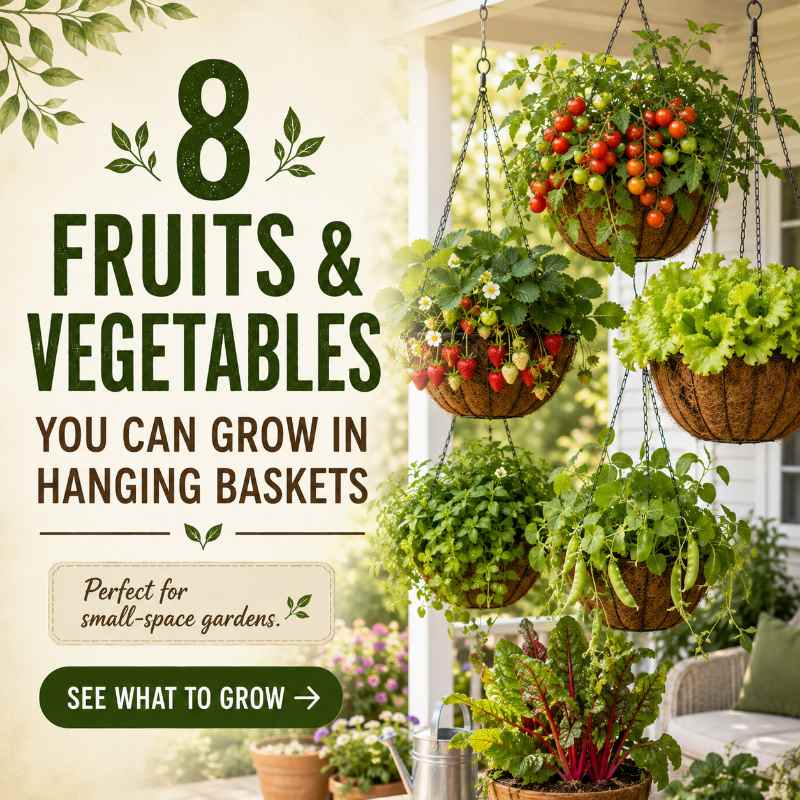
If you think hanging baskets are only for flowers, you might be surprised by how much food you can grow in them too. With the right plants, a sunny spot, and regular watering, hanging baskets can become mini edible gardens packed with fresh fruit, salad leaves, and tasty vegetables.
They are perfect for small gardens, patios, balconies, porches, and even rental homes where you may not have space for raised beds. Hanging baskets also keep some crops away from slugs, make harvesting easier, and can turn boring outdoor spaces into something pretty and practical.
Here are 8 fruits and vegetables you can grow in hanging baskets, even if you are short on space.
1. Strawberries 🍓
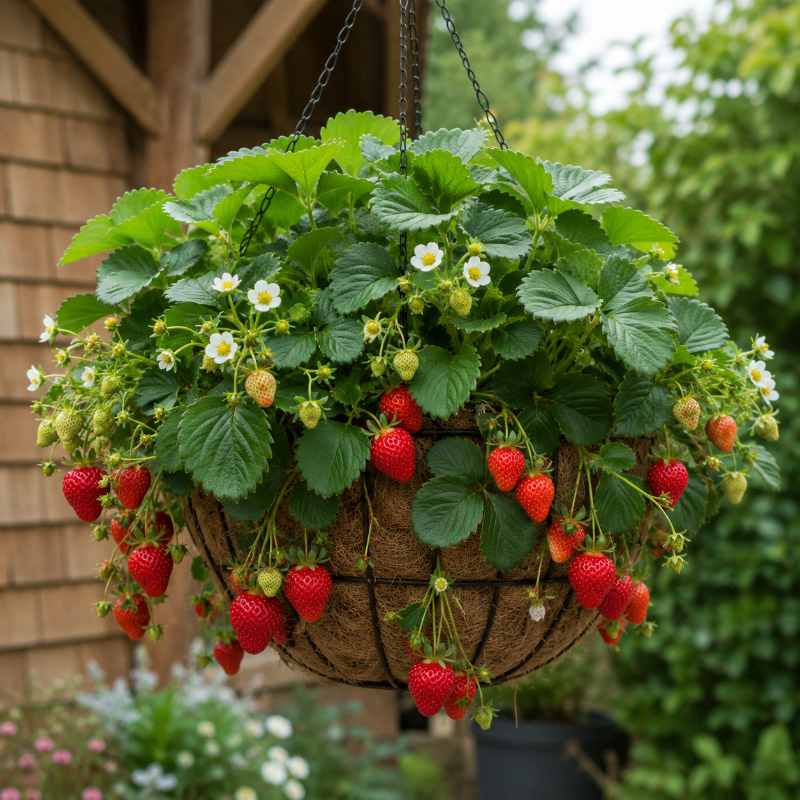
Strawberries are one of the best fruits to grow in hanging baskets. They look beautiful when the plants trail over the sides, and the fruit is easy to pick when ripe.
Choose compact or trailing strawberry varieties for the best results. Hanging baskets also help keep the fruit off the ground, which can reduce slug damage and stop the berries from sitting in damp soil.
For best results, place your basket somewhere sunny and water regularly, especially when the fruit starts to form.
Best for: sunny patios, porches, balconies, and small gardens.
2. Cherry Tomatoes 🍅
Small tomato varieties are perfect for hanging baskets, especially tumbling or trailing types. These plants grow over the edge of the basket and produce lots of bite-sized tomatoes through summer.
Look for varieties labelled as “tumbling,” “basket,” or “patio” tomatoes. They do not need as much support as tall tomato plants, which makes them ideal for hanging containers.
Tomatoes need plenty of sun, regular watering, and feeding once the flowers appear. If you keep them happy, one basket can give you a lovely crop of fresh tomatoes for salads, sandwiches, and snacks.
Best for: warm sunny spots with at least 6 hours of sunlight.
3. Lettuce 🥬
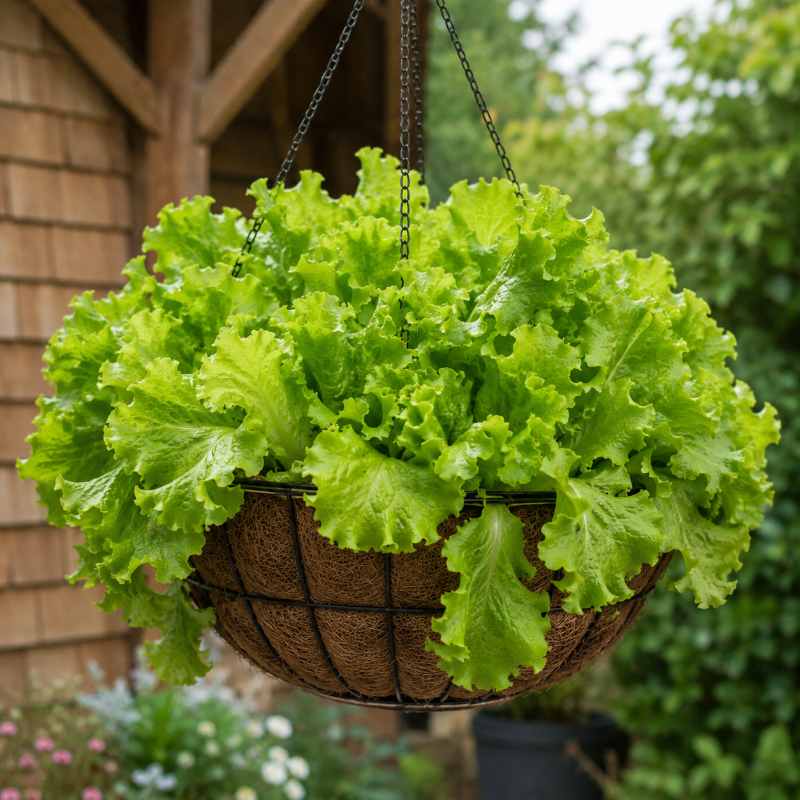
Lettuce is a brilliant vegetable for hanging baskets because it has shallow roots and grows quickly. You can grow loose-leaf lettuce and pick a few leaves at a time instead of pulling up the whole plant.
This makes it a great cut-and-come-again crop. As long as you keep picking the outer leaves, the plant can keep producing for weeks.
Lettuce prefers cooler weather, so it does well in spring and autumn. In hot summer weather, place the basket somewhere with morning sun and afternoon shade to stop the leaves from turning bitter.
Best for: quick harvests and easy salad bowls.
4. Spinach 🌿
Spinach grows well in hanging baskets, especially baby leaf spinach. Like lettuce, it does not need deep soil and can be harvested little and often.
It is a great choice if you want something useful for salads, smoothies, omelettes, pasta dishes, and stir-fries. Spinach grows best in cooler weather and can bolt if it gets too hot, so it is ideal for spring and autumn baskets.
Keep the soil moist and harvest the young leaves regularly for the best flavour.
Best for: cooler months and healthy homegrown greens.
5. Radishes 🌱
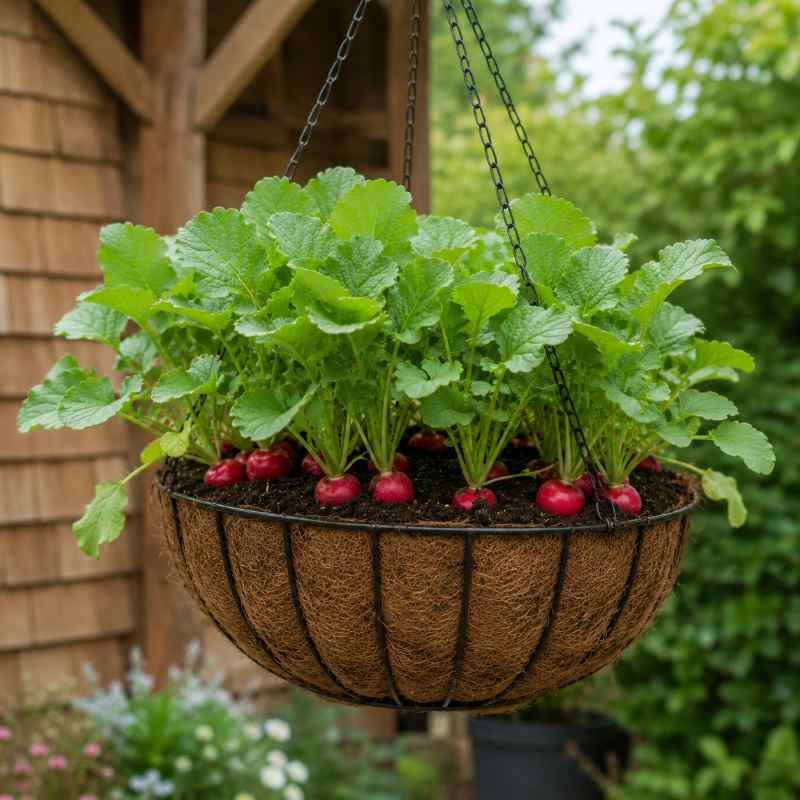
Radishes are one of the fastest vegetables you can grow, and they can do surprisingly well in hanging baskets. Because they mature quickly, they are great for beginner gardeners or anyone who wants a fast harvest.
Choose round or small radish varieties rather than long-rooted types. A deeper hanging basket will give them more room to form properly.
Radishes like consistent watering. If they dry out too much, they can become woody or overly spicy. Sow a small amount every couple of weeks for a steady supply.
Best for: fast results and beginner gardeners.
6. Mini Cucumbers 🥒
Small cucumber varieties can be grown in hanging baskets if you choose compact or trailing types. The vines can spill over the edge of the basket, making them a fun and productive crop.
Mini cucumbers need warmth, sunshine, and plenty of water. A larger hanging basket is best because cucumber plants can get thirsty very quickly.
Feed regularly once flowers appear, and check the plant often so you can pick the cucumbers while they are still small and tender.
Best for: warm sunny gardens and summer growing.
7. Peppers and Chillies 🌶️
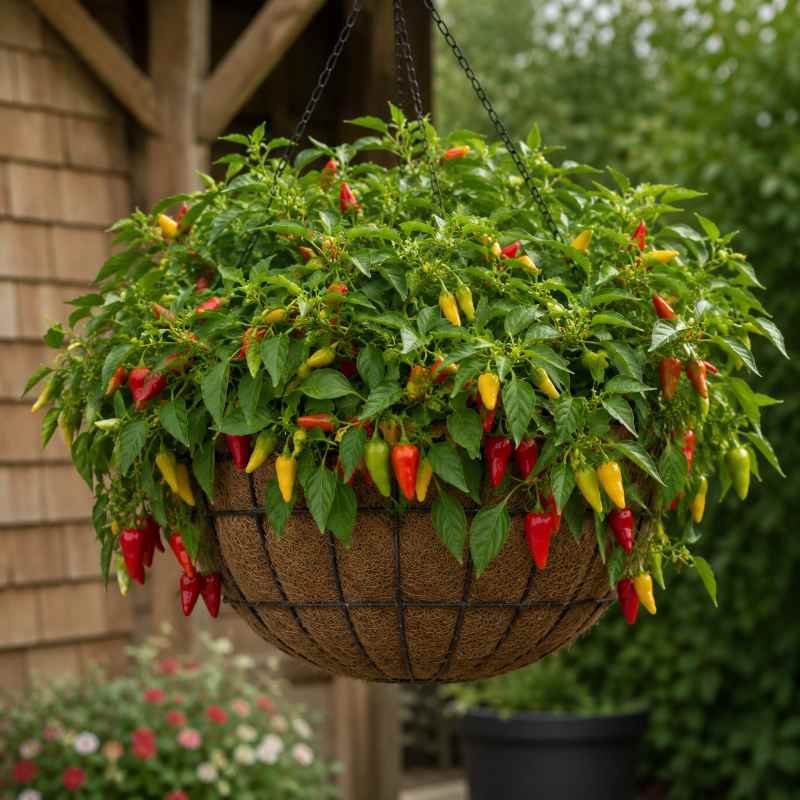
Small pepper and chilli plants are a great option for hanging baskets, especially compact varieties. They add colour, look attractive, and can produce a useful harvest in a small space.
Chillies often do especially well in pots and baskets because they like warm, sunny conditions. Just make sure the basket is strong enough and not too exposed to wind.
Use good compost, water regularly, and feed when the flowers and fruits start to form. Smaller chilli varieties are usually easier than large bell peppers in hanging baskets.
Best for: sunny sheltered spots and colourful edible displays.
8. Dwarf Peas 🫛
Dwarf peas can be grown in hanging baskets, especially smaller varieties that do not grow too tall. The plants can trail slightly or be supported with small twiggy sticks placed into the basket.
Peas prefer cooler weather, so they are great for spring growing. They also look lovely when flowering, and children often enjoy picking the pods straight from the plant.
Keep the basket watered and harvest pods regularly to encourage more production.
Best for: spring baskets and small-space growing.
Tips for Growing Food in Hanging Baskets
Growing edible plants in hanging baskets is easy, but they do need a little extra care compared with plants in the ground.
Choose a strong basket because wet compost can become heavy. A basket around 12 to 16 inches wide is a good size for most crops.
Use good quality multi-purpose compost and mix in slow-release feed if you have it. Hanging baskets dry out quickly, so check them daily in warm weather. In summer, they may need watering once or even twice a day.
Place your baskets where they get enough sun. Most fruiting crops like tomatoes, strawberries, cucumbers, and chillies need a bright sunny spot. Leafy crops like lettuce and spinach can cope with a bit more shade.
Best Hanging Basket Combinations
You can grow one crop per basket, or you can mix plants together if the basket is large enough.
Good combinations include:
Strawberries with lettuce around the edge
Cherry tomatoes with trailing herbs nearby
Lettuce, spinach, and radishes together
Chillies with leafy greens in early spring
Try not to overcrowd the basket. Plants need space, airflow, and enough compost to grow properly.
Final Thoughts
Hanging baskets are a clever way to grow food when space is limited. You do not need a big garden, raised beds, or lots of equipment. A sunny wall, porch, fence, balcony, or patio can become a mini growing space with the right baskets.
Strawberries, cherry tomatoes, lettuce, spinach, radishes, mini cucumbers, chillies, and dwarf peas are all great choices to try. Start with one or two baskets, see what grows best in your space, and build from there.
Once you realise how much food you can grow in hanging baskets, you may never look at them as just flower displays again.