 Home and Gardening Ideas At home and Gardening ideas we believe inspiring readers about homesteading, self sufficiency
What Is Chaos Gardening? (And Why Millions Are Trying It)
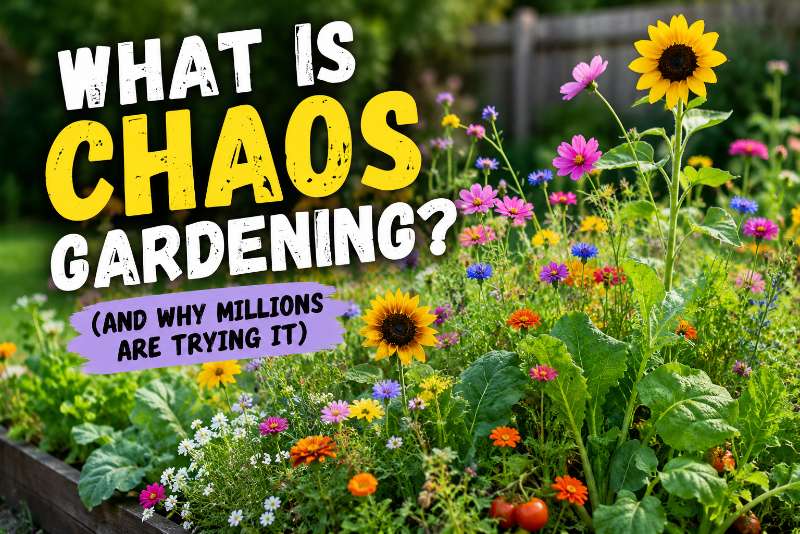
🌿 The Gardening Trend That’s Breaking All The Rules
What if the secret to a beautiful garden was actually doing less work?
That is exactly why Chaos Gardening has exploded across TikTok, Facebook gardening groups, YouTube, and gardening websites. Instead of carefully measuring rows, spacing plants perfectly, and obsessing over every weed, chaos gardeners are simply tossing seeds down and letting nature take over.
Sounds crazy, right?
But millions of people are trying it because it is:
- Beginner friendly
- Budget friendly
- Surprisingly productive
- Wildly beautiful
- Low stress
And honestly, for many people, it feels far more natural than traditional gardening.
Some gardeners absolutely love the wild cottage garden look 🌸
Others look at it and think:
“Yep… that just looks messy.”
Either way, chaos gardening gets people talking, which is one reason it has become one of the hottest gardening trends online right now.
So what exactly is chaos gardening, and why are so many people ditching neat rows for controlled chaos?
Let’s dig in 🌱
🌼 What Is Chaos Gardening?
Chaos gardening is a relaxed gardening method where seeds are mixed together and scattered across a garden bed instead of being planted in perfect rows or sections.
The idea is simple:
- Toss seeds
- Water occasionally
- Let nature decide what grows where
Some people use flower seeds only.
Others mix:
- Vegetables
- Herbs
- Wildflowers
- Pollinator plants
- Companion plants
The result is usually a colorful, dense, unpredictable garden full of surprises.
One week you might spot sunflowers towering over lettuce.
The next week you may discover tomatoes growing beside marigolds and basil.
It feels wild, natural, and exciting.
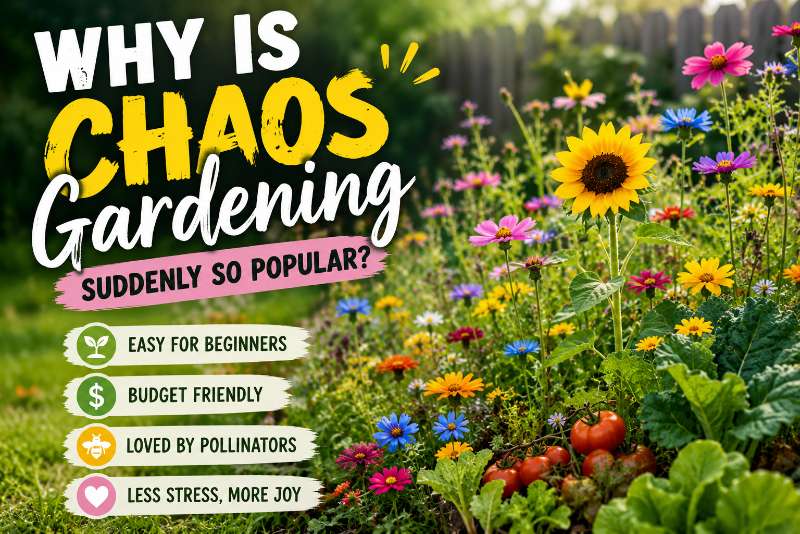
🤔 Why Is Chaos Gardening Suddenly So Popular?
There are several reasons this gardening trend has exploded online.
🌱 1. It Makes Gardening Feel Easy
Traditional gardening can feel intimidating.
People worry about:
- Perfect spacing
- Soil depth
- Seed timing
- Companion planting rules
- Watering schedules
Chaos gardening removes much of that pressure.
You simply start planting and learn as you go.
That freedom is incredibly appealing for beginners.
💰 2. It Can Save Money
Gardening costs can add up fast.
Raised beds, fertilizers, tools, edging, and perfect landscaping can become expensive.
Chaos gardening often uses:
- Cheap seed packets
- Leftover seeds
- Recycled containers
- Existing soil
- Minimal equipment
Many people even use older seeds they forgot they had.
🐝 3. Pollinators Love It
Bees, butterflies, and beneficial insects are attracted to diverse gardens packed with flowers and plants.
A chaos garden often creates:
- More biodiversity
- Better pollination
- Natural pest control
- Healthier ecosystems
That is one reason wildflower chaos gardens are especially popular.
😌 4. It Feels Less Stressful
Many gardeners say chaos gardening helped them actually enjoy gardening again.
Instead of stressing over perfection, they simply let nature do its thing.
There is something calming about accepting a little messiness.
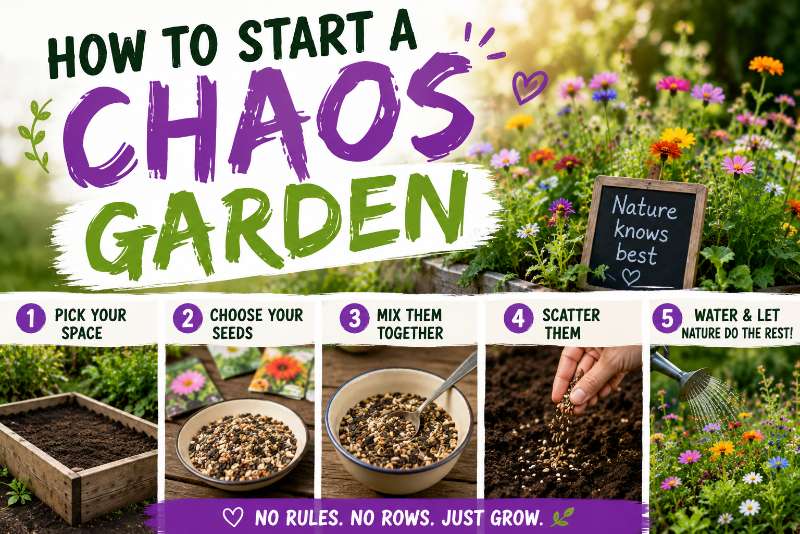
🌿 How To Start A Chaos Garden
Starting a chaos garden is surprisingly simple.
Step 1: Pick Your Space
You can chaos garden in:
- Raised beds
- Backyard plots
- Containers
- Buckets
- Balcony planters
- Empty flower beds
Even a small corner works.
Step 2: Choose Your Seeds
This is the fun part.
Popular chaos gardening seeds include:
🌸 Flowers
- Zinnias
- Cosmos
- Marigolds
- Sunflowers
- Wildflowers
🥬 Vegetables
- Lettuce
- Radishes
- Kale
- Tomatoes
- Beans
🌿 Herbs
- Basil
- Dill
- Cilantro
- Parsley
A mix creates the classic chaos gardening look.
Step 3: Mix Your Seeds Together
Many gardeners pour seeds into a bowl or bucket and mix them by hand.
Some even add a little soil or sand to spread them more evenly.
Step 4: Scatter Them
Now comes the chaotic part 😂
Scatter the seed mix across your chosen area.
No perfect rows.
No rulers.
No measuring tape.
Just toss and spread.
Step 5: Lightly Cover And Water
Lightly rake soil over the seeds or gently press them into the dirt.
Then water carefully.
After that, nature takes over.
🌻 What Makes Chaos Gardening So Fun?
One reason people become obsessed with chaos gardening is the surprise factor.
Every garden turns out differently.
You never fully know:
- What will thrive
- What combinations will appear
- Which plants will dominate
It feels more like discovering a garden than controlling one.
That unpredictability keeps people excited.
⚠️ Common Chaos Gardening Mistakes
Chaos gardening is easy, but there are still a few mistakes beginners make.
❌ Using Aggressive Plants
Some plants can completely take over.
Mint is a classic example.
A few aggressive growers may crowd out everything else.
❌ Planting Too Densely
It is tempting to throw down tons of seeds.
But overcrowding can lead to:
- Poor airflow
- Mold
- Smaller plants
- Competition for nutrients
Sometimes less is more.
❌ Forgetting About Sunlight
Even chaos gardens need the right conditions.
Sun loving plants still need sunlight.
Shade plants still prefer shade.
❌ Ignoring Water Completely
Chaos gardening is low maintenance, not zero maintenance.
Young seedlings still need water while establishing themselves.
🌼 Tips To Make Your Chaos Garden Thrive
🌞 Start Small
Try one bed or container first.
It is easier to manage and helps you learn what works.
🐝 Include Pollinator Flowers
Flowers attract bees and butterflies that help your garden thrive.
Marigolds and zinnias are fantastic beginner options.
🌱 Mix Heights And Textures
Tall sunflowers beside leafy greens create a beautiful layered look.
This makes the garden feel lush and natural.
🍅 Include Companion Plants
Some plants naturally help each other.
For example:
- Basil may help tomatoes
- Marigolds may deter pests
- Dill attracts beneficial insects
📸 Document The Process
Chaos gardens change rapidly.
Take weekly photos because the transformation can be incredible.
These photos also perform really well on social media 👀
🌎 Why Chaos Gardening Matters
Chaos gardening is bigger than just another internet trend.
For many people, it represents:
- Simpler living
- Less perfectionism
- Working with nature instead of against it
- Lower cost gardening
- A more relaxed lifestyle
In a world where everything feels carefully curated and filtered online, chaos gardening feels refreshingly real.
And honestly?
That may be why people connect with it so strongly.

❓Frequently Asked Questions About Chaos Gardening
Is chaos gardening good for beginners?
Absolutely. It is one of the easiest ways to start gardening because it removes much of the pressure and complexity.
Can you grow vegetables in a chaos garden?
Yes. Many people grow lettuce, tomatoes, beans, radishes, kale, and herbs successfully.
Does chaos gardening actually work?
Surprisingly, yes. While not every plant thrives, many gardeners report excellent results and healthier pollinator activity.
Does a chaos garden look messy?
That depends on personal taste 😂
Some people love the wild cottage style look, while others prefer neat rows and structure.
Can chaos gardening attract pests?
Any garden can attract pests, but biodiversity often helps attract beneficial insects that naturally reduce pest problems.
Is chaos gardening cheaper than traditional gardening?
Usually yes. Many people use inexpensive seed packets, recycled containers, and minimal tools.
Can I do chaos gardening in containers?
Definitely. Chaos gardening works well in pots, grow bags, and raised beds.
🌿 Final Thoughts
Chaos gardening may sound completely backwards, but that is exactly why people love it.
It removes the pressure.
It encourages experimentation.
And it reminds people that gardens do not need to be perfect to be beautiful.
Some gardeners will always prefer carefully organized rows.
Others are embracing the chaos and loving every second of it 🌸
And judging by the millions of views online, this trend is only getting bigger.
So here is the big question…
👉 Would YOU try chaos gardening, or would the mess drive you crazy?