 Home and Gardening Ideas At home and Gardening ideas we believe inspiring readers about homesteading, self sufficiency
The 12 Easiest Vegetables to Grow in Home Gardens Or Containers For First Time Gardeners
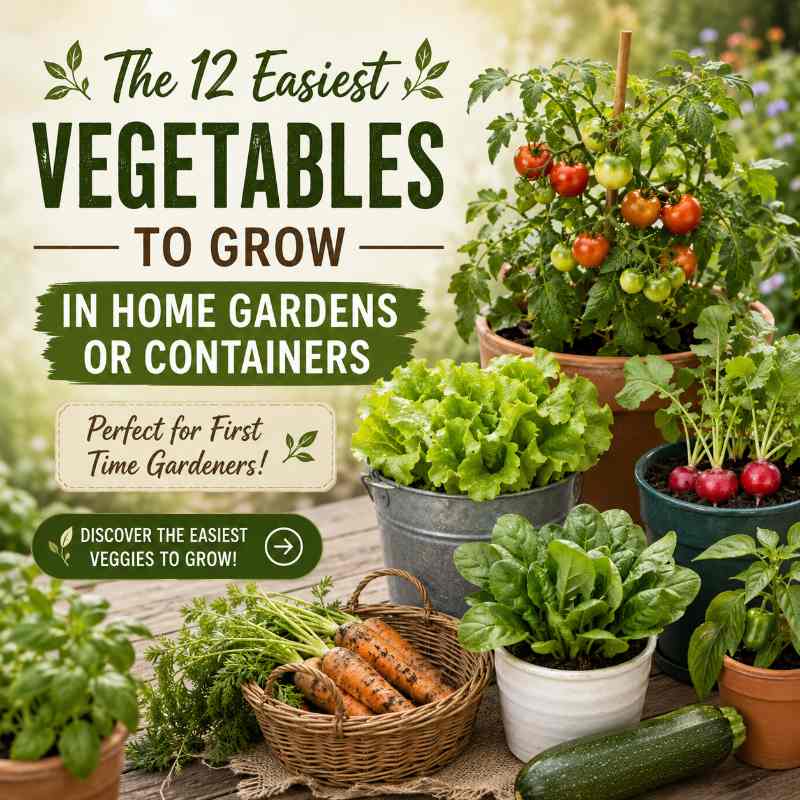
Growing your own vegetables sounds exciting until you stand in front of seed packets and realise there are hundreds to choose from. Some need perfect soil, some need constant attention, and some seem to get attacked by every pest in the garden.
The good news is, you do not need a huge garden, years of experience, or expensive equipment to start growing food at home. Some vegetables are surprisingly easy, forgiving, and happy to grow in containers, raised beds, small gardens, patios, and even sunny balconies.
If you are a first time gardener, the trick is to start with vegetables that grow quickly, do not need too much fuss, and give you a proper win early on. Once you taste your first homegrown salad leaf, tomato, or handful of beans, you will understand why so many people get hooked.
Here are 12 of the easiest vegetables to grow in home gardens or containers.
1. Lettuce And Salad Leaves 🥬
Lettuce is one of the best vegetables for beginners because it grows quickly and does not need much space. You can grow it in pots, window boxes, raised beds, or small patches of soil.
Loose leaf lettuce is especially easy because you can cut a few leaves at a time and let the plant keep growing. This is often called “cut and come again” gardening, and it is perfect if you want regular harvests without replanting every week.
Lettuce prefers cooler weather, so it does best in spring and autumn. In summer, try growing it somewhere that gets morning sun and afternoon shade to stop it from wilting or going to seed too quickly.
Best beginner tip:
Sow a small amount every 2 weeks instead of planting everything at once. This gives you a steady supply of fresh salad leaves.
Good for containers?
Yes. A shallow pot, trough, or window box works really well.
2. Radishes
Radishes are one of the fastest vegetables you can grow, which makes them brilliant for impatient beginners. Some varieties can be ready in as little as 4 weeks, so they are a great confidence boost.
They do not need deep soil, they grow well in containers, and they are easy to sow directly where you want them to grow. Just sprinkle the seeds, cover lightly with soil, water well, and wait.
Radishes are perfect for filling gaps between slower-growing crops. You can grow them between lettuce, carrots, peas, or spring onions while those plants are still small.
Best beginner tip:
Keep the soil moist. If radishes dry out too much, they can become woody, tough, or overly spicy.
Good for containers?
Yes. Use a pot at least 6 inches deep.
3. Spring Onions
Spring onions are simple, useful, and great for small spaces. They do not need much room, and you can grow them in containers, raised beds, or even tucked between other vegetables.
They are also very handy in the kitchen. Add them to salads, stir fries, omelettes, soups, sandwiches, and baked potatoes. You do not need a huge harvest for them to feel useful.
You can grow spring onions from seed, but beginners may find it easier to start with young plants or sow them in small rows. They are fairly low maintenance once they get going.
Best beginner tip:
Sow little and often. A short row every few weeks will keep you supplied for longer.
Good for containers?
Yes. They grow well in pots, troughs, and planters.
4. Peas
Peas are a lovely beginner crop because they are fun to grow, easy to pick, and taste far better fresh from the garden than they do from the shop.
They do need some support, but it does not have to be fancy. A few bamboo canes, sticks, pea netting, or even a simple homemade frame will do the job.
Sugar snap peas and mangetout are especially good for beginners because you eat the pods as well as the peas. That means less waiting and less shelling.
Peas like cooler weather, so they are usually best grown in spring and early summer. They can also be grown again later in the year in some areas.
Best beginner tip:
Pick peas regularly. The more you pick, the more the plant is encouraged to keep producing.
Good for containers?
Yes. Use a deep pot and give them support to climb.
5. Bush Beans
Bush beans, also called dwarf beans or French beans, are much easier for beginners than some taller climbing varieties because they stay compact and usually do not need a large support frame.
They grow quickly in warm weather and can produce a generous crop from a small space. You can grow them in beds, raised planters, or medium-sized containers.
Beans are a great choice if you want something that feels productive. Once they start cropping, you can often pick a handful every few days.
Best beginner tip:
Wait until the weather has warmed up before planting them outside. Beans do not like cold soil.
Good for containers?
Yes. Choose a container at least 12 inches deep and wide enough for a few plants.
6. Cherry Tomatoes 🍅
Tomatoes are one of the most popular vegetables for new gardeners, and cherry tomatoes are usually the easiest type to start with.
They are smaller, quicker to ripen, and often more reliable than large beefsteak tomatoes. They grow well in containers, grow bags, raised beds, and sunny patios.
For beginners, choose a bush variety if you want something simple and compact. Bush tomatoes usually need less pruning than tall cordon varieties.
Tomatoes need warmth, sunlight, regular watering, and feeding once they start flowering. They are not completely effortless, but they are very rewarding.
Best beginner tip:
Water consistently. Irregular watering can cause split fruit and stressed plants.
Good for containers?
Yes. A large pot, bucket-style planter, or grow bag works well.
7. Courgettes
Courgettes are famous for being productive. In fact, once they start growing well, you may find yourself giving extras away to friends and family.
They are a good beginner vegetable because they grow fast, look impressive, and can produce a lot from just one or two plants.
Courgettes do need space, so they are better suited to larger containers, raised beds, or garden borders. If growing in a pot, choose a large container and keep it well watered.
Best beginner tip:
Pick courgettes when they are small and tender. If you leave them too long, they quickly turn into huge marrows.
Good for containers?
Yes, but only in large pots. One plant per big container is best.
8. Spinach
Spinach is another easy leafy vegetable that grows well in small spaces. It is useful because you can eat it raw in salads or cook it into pasta, soups, curries, omelettes, and stir fries.
Like lettuce, spinach prefers cooler conditions. It can struggle in hot summer weather, but it does very well in spring and autumn.
Baby spinach leaves can be picked when young, which means you do not have to wait too long before harvesting.
Best beginner tip:
Grow spinach in partial shade during warmer months to help stop it from bolting.
Good for containers?
Yes. A wide shallow container works well.
9. Kale
Kale is one of the toughest and most forgiving vegetables you can grow. It handles cooler weather well, keeps producing for a long time, and does not need perfect conditions.
For beginners, kale is a great choice because you can pick a few leaves at a time instead of harvesting the whole plant. This makes it useful for regular meals.
You can grow kale in beds, raised planters, or containers. Smaller varieties are best if you are short on space.
Best beginner tip:
Pick the lower leaves first and leave the centre of the plant to keep growing.
Good for containers?
Yes. Use a decent-sized pot and keep it watered.
10. Beetroot
Beetroot is easy to grow and gives you two harvests from one plant. You can eat the roots, but you can also use the young leaves in salads or cook them like spinach.
It grows well in garden soil, raised beds, and containers. It does not need much fuss, and it is a good crop for beginners who want something colourful and satisfying.
Beetroot seeds are quite large compared with some vegetable seeds, so they are easier to handle when sowing.
Best beginner tip:
Do not let beetroot get too big before harvesting. Smaller roots are usually sweeter and more tender.
Good for containers?
Yes. Use a pot around 8 to 10 inches deep.
11. Carrots
Carrots can be easy if you choose the right type. Long carrots need deep, stone-free soil, which can be difficult for beginners. Short or round carrot varieties are much easier, especially in containers.
Carrots are best sown directly where they will grow because they do not like being moved. Use fine soil or compost, water gently, and be patient because they can take a little while to germinate.
If you are growing in containers, carrots can actually be easier than growing in the ground because you can control the soil better.
Best beginner tip:
Choose short-rooted varieties for pots and avoid fresh manure, which can cause forked carrots.
Good for containers?
Yes. Choose a deep container and short carrot varieties.
12. Potatoes In Containers 🥔
Potatoes are one of the most satisfying vegetables for beginners because harvesting them feels like digging for treasure.
You do not need a big vegetable patch to grow potatoes. They grow well in large pots, buckets with drainage holes, grow bags, or old compost sacks.
Start with seed potatoes, not supermarket potatoes. Plant them in a layer of compost, cover them, and keep adding more compost as the shoots grow. This is called earthing up, and it helps protect the potatoes as they develop.
Best beginner tip:
Keep the container watered, especially once the plants are growing strongly and forming potatoes.
Good for containers?
Yes. Potatoes are one of the best beginner crops for large containers and grow bags.
Quick Beginner Growing Guide
If this is your first year growing vegetables, do not try to grow everything at once. Start with 3 to 5 easy crops and learn as you go.
A good first garden or container setup could be:
- Lettuce in a shallow pot
- Radishes in a trough
- Cherry tomatoes in a large container
- Bush beans in a raised bed or pot
- Potatoes in a grow bag
This gives you quick harvests, useful crops, and a mix of easy wins.
Best Vegetables For Small Containers
If you only have a patio, balcony, or small space, start with:
- Lettuce
- Radishes
- Spring onions
- Spinach
- Beetroot
- Short carrots
- Cherry tomatoes
These are ideal because they do not need huge amounts of room and can grow well in pots.
Best Vegetables For Raised Beds
If you have a raised bed, try:
- Bush beans
- Peas
- Kale
- Courgettes
- Beetroot
- Lettuce
- Potatoes
Raised beds are great for beginners because the soil warms up faster, drains better, and is easier to manage than a large garden patch.
Simple Tips For First Time Vegetable Gardeners
Start small
A few healthy plants are better than a huge garden that becomes overwhelming.
Use good compost
Container vegetables rely on the compost you give them, so start with decent multipurpose compost.
Water regularly
Containers dry out faster than garden beds, especially in warm weather.
Choose a sunny spot
Most vegetables need at least a few hours of sun each day. Fruiting crops like tomatoes and courgettes need the most sun.
Label everything
It is easy to forget what you planted and where, especially when seeds first sprout.
Do not panic over mistakes
Every gardener loses a few plants. That is normal. The key is to learn and keep going.
FAQs About Easy Vegetables For Beginners
What is the easiest vegetable to grow for a complete beginner?
Radishes, lettuce, and spring onions are some of the easiest vegetables for complete beginners. They grow quickly, do not need much space, and can be grown in containers.
What vegetables grow fastest?
Radishes are one of the fastest, often ready in about 4 weeks. Lettuce, spinach, and baby salad leaves are also quick crops.
Can I grow vegetables without a garden?
Yes. Many vegetables grow well in containers, including lettuce, radishes, spring onions, spinach, cherry tomatoes, carrots, beetroot, and potatoes.
What vegetables should beginners avoid at first?
Beginners may want to avoid crops that need lots of space, long growing seasons, or constant attention. Cauliflower, celery, melons, and large onions can be harder for first time gardeners.
What is the best vegetable to grow in pots?
Lettuce, radishes, cherry tomatoes, potatoes, spring onions, and short carrots are all excellent vegetables for pots.
Final Thoughts
Growing your own vegetables does not have to be complicated. You do not need a perfect garden, expensive tools, or years of knowledge to get started.
The easiest way to begin is to choose forgiving crops that grow well in small spaces and give you quick results. Lettuce, radishes, spring onions, peas, beans, tomatoes, courgettes, spinach, kale, beetroot, carrots, and potatoes are all brilliant choices for first time gardeners.
Start with a few pots, keep things simple, and enjoy the little wins. Your first homegrown harvest might be small, but it will taste better than anything you could buy from the shop.
Internal Links To Add
Add these naturally inside the article if the pages are live on your site:
12 Old-Fashioned Garden Tricks That Still Work
https://www.homeandgardeningideas.com/12-old-fashioned-garden-tricks-that-still-work-better-than-modern-hacks/
7 Easy To Grow Mosquito-Repelling Plants
https://www.homeandgardeningideas.com/7-easy-to-grow-mosquito-repelling-plants/
Best Money-Saving DIY Projects And Tips
https://www.homeandgardeningideas.com/best-money-saving-diy-projects-and-tips-for-doing-them-right/
20 Things To Save From The Bin Before Winter
https://www.homeandgardeningideas.com/20-things-to-save-from-the-bin-before-winter/
One comment
Pingback: The 12 Easiest Vegetables To Grow At Home