 Home and Gardening Ideas At home and Gardening ideas we believe inspiring readers about homesteading, self sufficiency
20 Clever Gardening Tips And Ideas
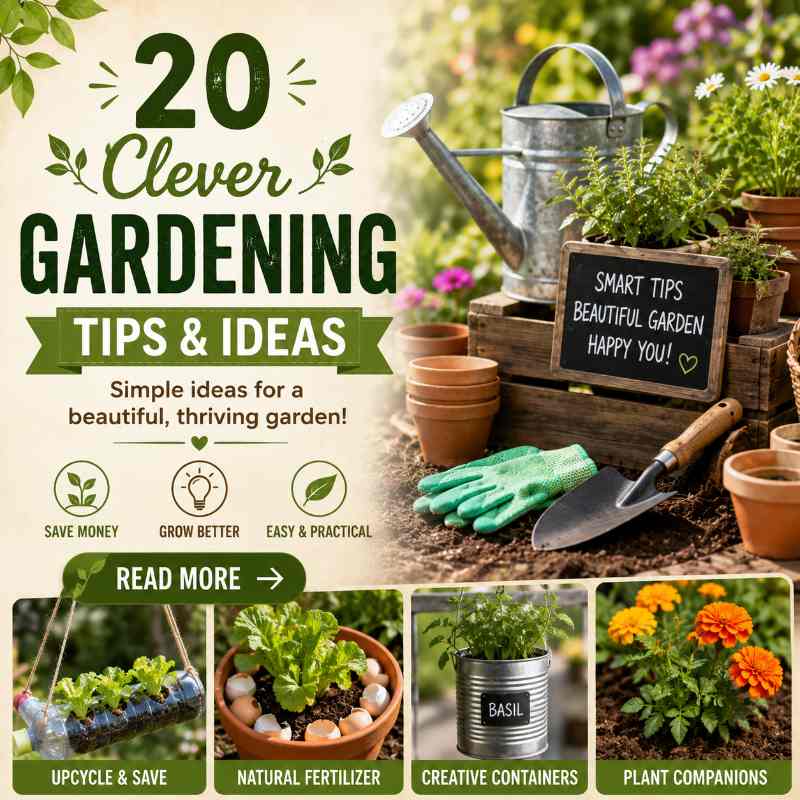
20 Clever Gardening Tips And Ideas That Make Growing Easier
Gardening does not have to involve expensive equipment, complicated techniques, or hours of back-breaking work.
Some of the best gardening ideas are surprisingly simple. Everyday household items can be reused as plant supports, seed starters, watering tools, and natural pest deterrents.
Whether you are growing vegetables in a large garden, planting flowers in containers, or starting your first small herb garden, these clever gardening tips can help you save money, reduce waste, and grow healthier plants.
1. Use Cardboard To Stop Weeds
Before creating a new flower bed or vegetable patch, place flattened cardboard directly over the grass and weeds.
Cover the cardboard with compost, soil, bark, or wood chips. The cardboard blocks sunlight, helping to smother weeds underneath.
It will gradually break down and improve the soil at the same time.
Gardening tip: Remove plastic tape and labels before putting cardboard in the garden.
2. Turn Plastic Bottles Into Mini Greenhouses
Clear plastic bottles can protect young seedlings from cold weather, strong winds, slugs, and birds.
Cut the bottom off a bottle and place it over the plant like a miniature greenhouse.
Leave the lid off during warm weather so excess heat and moisture can escape.
This works especially well for:
- Tomatoes
- Courgettes
- Pumpkins
- Cucumbers
- Young salad plants
3. Add Crushed Eggshells To Your Compost
Instead of throwing eggshells away, rinse them, allow them to dry, and crush them before adding them to your compost bin.
Eggshells break down slowly, but they add calcium and other minerals to finished compost.
Crushing them into small pieces helps them decompose more quickly.
4. Water Plants Early In The Morning
The best time to water most garden plants is early in the morning.
Morning watering gives plants time to absorb moisture before the hottest part of the day. It also allows wet leaves to dry, which may reduce the risk of fungal problems.
Water deeply around the base of the plant instead of lightly spraying the leaves.
5. Make Plant Labels From Old Wooden Spoons
Old wooden spoons make large, easy-to-read plant markers.
Paint them, write the plant name using a waterproof marker, and push the handles into the soil.
They are especially useful in herb gardens, vegetable beds, and children’s gardening projects.
6. Grow Herbs Near The Kitchen Door
Plant frequently used herbs close to your kitchen.
A few pots of parsley, thyme, chives, rosemary, basil, and mint can make it much easier to use fresh herbs while cooking.
Keeping herbs nearby also means you are more likely to notice when they need watering or harvesting.
Important: Grow mint in its own container because it can spread aggressively through garden beds.
7. Use Toilet Roll Tubes As Seed Pots
Cardboard toilet roll tubes make excellent biodegradable seed pots.
Place the tubes upright in a tray, fill them with seed compost, and sow one or two seeds in each tube.
When the seedlings are ready, plant the entire tube into the ground. The cardboard will gradually break down.
This method is particularly useful for plants that dislike having their roots disturbed, including peas, beans, and sweet peas.
8. Plant Flowers That Attract Pollinators
Bees, butterflies, hoverflies, and other pollinating insects play an important role in the garden.
Attract them by growing nectar-rich flowers such as:
- Lavender
- Borage
- Cosmos
- Marigolds
- Sunflowers
- Foxgloves
- Verbena
Try to grow flowers with different shapes and flowering times so pollinators have food throughout the growing season.
9. Save Rainwater For Dry Weather
Position a water butt beneath a gutter or downpipe to collect rainwater from your roof.
Rainwater is free and can be particularly useful during hot, dry weather.
Many plants also prefer rainwater to heavily treated tap water.
Always cover water containers securely to prevent accidents and reduce problems with mosquitoes or debris.
10. Use Grass Clippings As Mulch
A thin layer of grass clippings can help retain moisture and reduce weeds around established plants.
Allow fresh grass clippings to dry slightly before spreading them around the garden. Apply them in thin layers rather than creating one thick, wet pile.
Avoid using clippings from lawns recently treated with weedkiller or other chemicals.
11. Place Stones In Plant Saucers For Extra Humidity
Indoor plants and greenhouse plants can benefit from a simple humidity tray.
Fill a shallow saucer with small stones or gravel, add a little water, and place the plant pot on top.
The bottom of the pot should sit above the water rather than directly in it.
As the water evaporates, it increases humidity around the plant.
12. Grow Vertically To Save Space
Small garden? Grow upwards instead of outwards.
Use trellises, arches, fences, hanging baskets, shelves, and wall planters to increase your growing space.
Climbing plants that work well vertically include:
- Runner beans
- Peas
- Cucumbers
- Climbing courgettes
- Sweet peas
- Climbing roses
- Nasturtiums
Vertical growing can also make harvesting easier and improve air circulation around plants.
13. Put A Sponge In The Bottom Of Containers
Placing a clean sponge in the bottom of a large plant pot can help hold a small amount of moisture.
This can be useful for containers that dry out quickly during summer.
Make sure the drainage holes remain uncovered. Plants still need excess water to escape, as constantly waterlogged compost can cause root problems.
14. Use Cinnamon When Starting Seeds
A light sprinkling of ground cinnamon over the surface of seed compost is sometimes used by gardeners when starting seedlings.
The main defence against seedling problems, however, is good airflow, clean containers, fresh compost, and careful watering.
Avoid soaking young seedlings. Compost should be damp but not constantly wet.
15. Create A Simple Drip Waterer
Turn an empty plastic bottle into a slow watering system.
Make a few tiny holes in the lid, fill the bottle with water, and place it upside down in the soil near the plant.
The water will gradually seep into the surrounding compost.
This can help keep container plants watered for longer, although it should be tested before relying on it while you are away.
16. Leave Space Between Plants
It is tempting to squeeze as many plants as possible into a small area, but overcrowding can cause problems.
Plants need adequate space for:
- Root development
- Air circulation
- Sunlight
- Easy harvesting
- Healthy growth
Crowded plants may compete for nutrients and moisture. Poor airflow can also encourage fungal diseases.
Always check the recommended spacing on the seed packet or plant label.
17. Use Coffee Grounds Carefully
Used coffee grounds can be added to a compost bin in moderate amounts.
They contain nitrogen and work best when mixed with dry materials such as cardboard, shredded paper, dry leaves, or small twigs.
Avoid placing thick layers of coffee grounds directly around plants. When compacted, they can form a dense layer that makes it difficult for water and air to reach the soil.
18. Grow Companion Plants Together
Companion planting involves growing certain plants close together because they may benefit one another.
Popular combinations include:
- Tomatoes with basil
- Carrots with onions
- Lettuce beneath taller plants
- Nasturtiums near beans
- Marigolds around vegetable beds
Companion planting can make better use of space, attract helpful insects, and create a more varied garden.
It should be used alongside good watering, feeding, crop rotation, and pest control rather than treated as a guaranteed solution.
19. Check Plants Before Buying Them
Before buying a plant from a garden centre, inspect it carefully.
Look underneath the leaves and around the stems for pests, sticky residue, webbing, yellowing, or signs of disease.
Choose plants with healthy leaves, firm stems, and plenty of new growth.
A smaller healthy plant will often establish better than a larger plant that is already stressed.
20. Keep A Simple Garden Journal
A garden journal can help you remember what worked and what failed.
Record:
- What you planted
- When seeds were sown
- Where plants were positioned
- Harvest dates
- Pest problems
- Weather conditions
- Successful plant varieties
You do not need a complicated system. A notebook, calendar, or notes app on your phone is enough.
After a few growing seasons, your notes can become one of your most useful gardening resources.
Bonus Tip: Make Your Own Compost
Homemade compost can improve soil structure, retain moisture, and reduce the amount of household waste sent to landfill.
Good compost ingredients include:
- Vegetable peelings
- Fruit scraps
- Coffee grounds
- Crushed eggshells
- Grass clippings
- Dry leaves
- Shredded cardboard
- Small garden cuttings
Try to combine moist green materials with dry brown materials.
Avoid adding meat, dairy products, cooked food, pet waste, diseased plants, or weeds containing mature seeds to a basic home compost bin.
Common Gardening Mistakes To Avoid
Even experienced gardeners occasionally make mistakes. Some of the most common include:
Watering Too Little And Too Often
Light watering encourages roots to remain close to the surface. Deep, less frequent watering usually encourages stronger root development.
Planting In The Wrong Location
A sun-loving plant will struggle in deep shade, while shade-loving plants may become scorched in full afternoon sun.
Check the plant label before choosing a position.
Forgetting About Mature Plant Size
Small plants can quickly become large shrubs, spreading herbs, or vigorous climbers. Allow enough room for their mature size.
Using Too Much Fertiliser
More fertiliser does not always mean more flowers or vegetables. Overfeeding can damage roots or produce lots of leafy growth with very little fruit.
Ignoring Pests Until They Take Over
Inspect plants regularly. Aphids, caterpillars, slugs, snails, and other pests are usually easier to control when spotted early.
Frequently Asked Questions
What is the easiest thing to grow for a beginner?
Lettuce, radishes, peas, courgettes, herbs, and runner beans are all good choices for beginners. Choose plants suited to your available space and sunlight.
How can I improve poor garden soil?
Add well-rotted compost or organic matter each year. Mulching the surface and avoiding unnecessary digging may also help improve soil structure over time.
How often should I water container plants?
This depends on the plant, pot size, weather, and compost. During hot weather, some containers may need checking every day. Push a finger into the compost to see whether it feels dry below the surface.
Can vegetables be grown without a large garden?
Yes. Many vegetables grow successfully in pots, raised beds, grow bags, hanging baskets, window boxes, and other containers.
What can I use as a natural mulch?
Suitable materials include homemade compost, leaf mould, bark, wood chips, straw, grass clippings, and well-rotted manure. The best choice will depend on the plants and area being mulched.
How can I attract more wildlife to my garden?
Grow a variety of flowering plants, provide shallow water, avoid unnecessary pesticides, leave a few undisturbed areas, and create safe spaces for insects, birds, and small animals.
Final Thoughts
You do not need a huge budget or a professional garden design to create a productive and beautiful outdoor space.
Start with one or two of these clever gardening ideas and see what works in your own garden. Save rainwater, reuse household materials, grow vertically, make compost, and choose plants suited to your conditions.
The most successful gardens are rarely perfect. They develop gradually through observation, experimentation, and plenty of small improvements.
Which of these gardening tips will you try first?



One comment
Pingback: 20 Insanely Clever Gardening Tips And Ideas